

Editor’s note: This is an editorial selection.
Pontiac mixed theatrical details with useful everyday ideas, from a hood-mounted gauge to a Vibe passenger seat that became a table. These examples come from specific American-market models.
1. The tachometer could sit outside on the hood
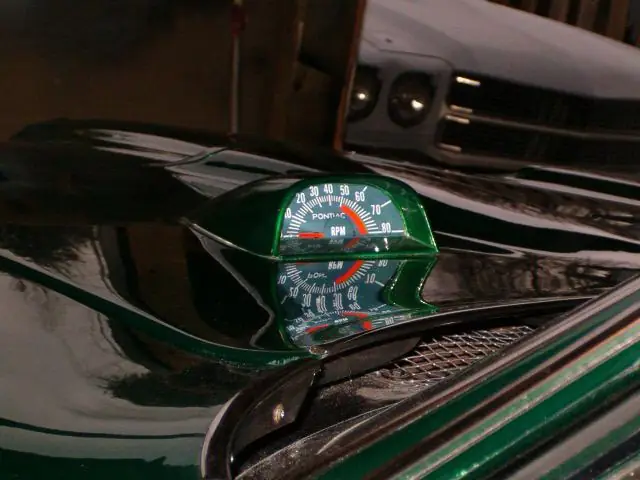
Pontiac’s 1967 performance brochure offered a dealer-installed hood-mounted tachometer for the GTO. The engine-speed display stood outside the windshield instead of staying within the instrument panel.
It made a functional gauge part of the car’s outward appearance, visible even when the engine was off.
The raised housing made the gauge visible from outside the car. Pontiac offered it as dealer-installed equipment, rather than a standard fitting on every GTO.
2. The headlights could hide behind the grille
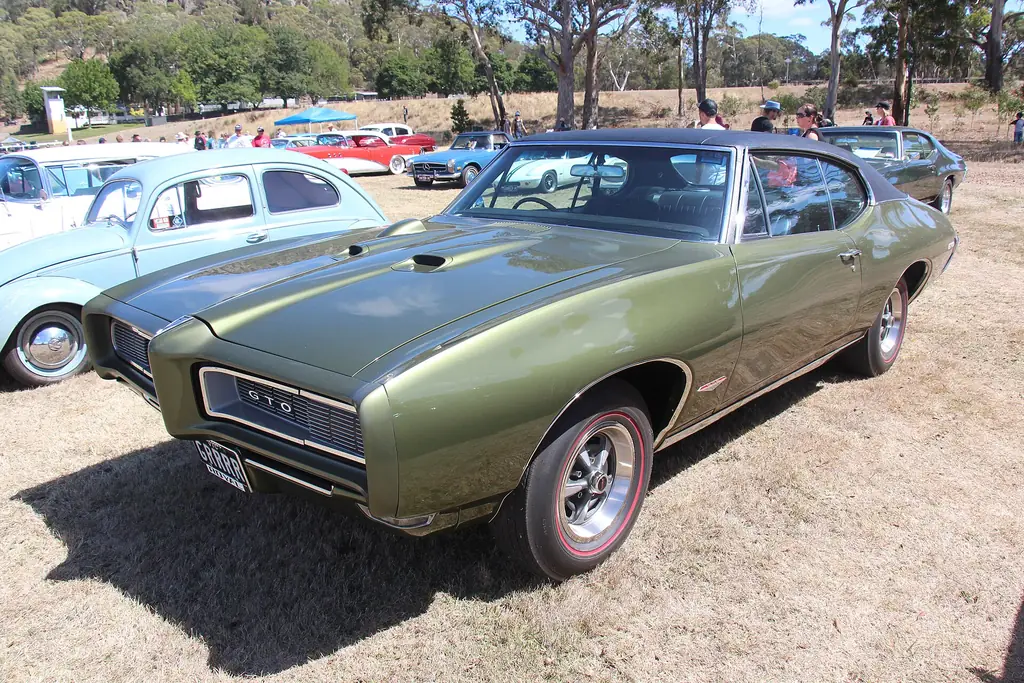
The 1968 GTO brochure listed disappearing headlights as an extra-cost choice. Closed covers helped the lamps blend into the front of the car, leaving a continuous grille appearance.
The effect depended on equipment, so an exposed-headlamp GTO was not necessarily missing a part.
The moving covers were separate from the lamps. Opening them changed the grille’s appearance, giving this option a visible effect before the lights were switched on.
3. The bumper became part of the body color
The 1968 GTO placed a body-colored Endura bumper around its front end. It changed the relationship between painted sheet metal and a bright chrome bumper.
The result made the nose look more like one continuous shape, especially beside earlier GTOs.
The bumper no longer appeared as a separate bright bar below the nose. The GTO’s front bodywork and bumper could share the same color.
4. An automatic shifter could have a second gate
For a 1967 GTO ordered with the console-mounted Turbo Hydra-Matic, Pontiac described a Hurst quadrant with two slots. One served normal automatic operation; the other allowed manual gear selection.
That extra gate gave the automatic selector a more deliberate mechanical feel.
It is a small interior detail with a clear purpose. The brochure’s description does not mean the transmission became a manual gearbox or acquired a clutch pedal.
5. The Trans Am wore a shaker above the hood
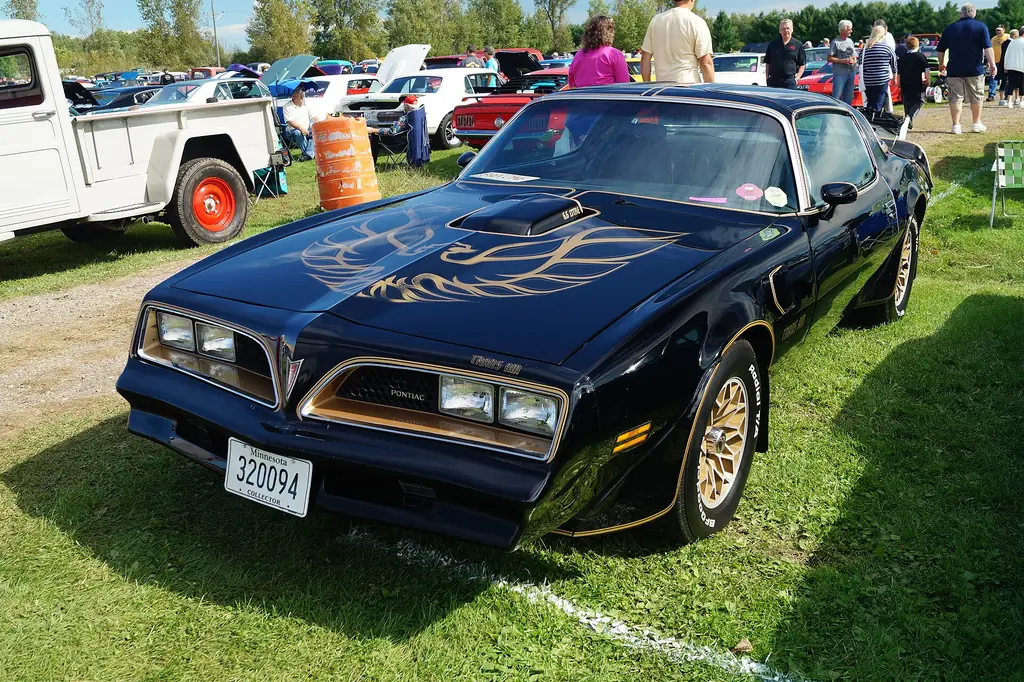
The 1976 Trans Am brochure named a shaker hood among its distinctive exterior equipment. The raised scoop-like piece gave the hood a focal point that was easy to recognize from the driver’s seat.
Its appearance became part of the car’s identity, alongside the spoiler and fender details.
The shaker stood above the hood, giving the driver a clear view of it. Our car controls guide explores details inside the cabin.
6. The dashboard could have a swirling metal look
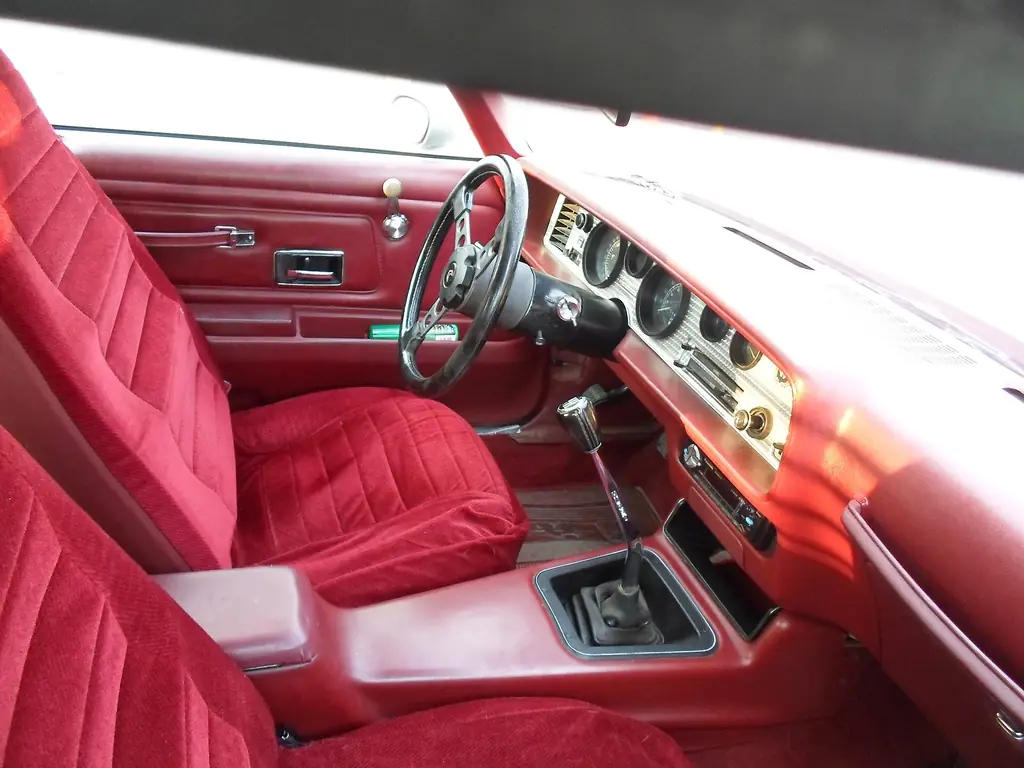
The 1976 Trans Am paired its rally gauges with an instrument panel that had the look of engine-turned aluminum. The repeating circular pattern surrounded the instruments instead of disappearing behind plain trim.
The visual texture gave the driver’s side of the cabin a recognizable finish.
For newer Chevrolet cabin features, see our Chevy Trax guide. In the Trans Am, the patterned panel gave the gauges a conspicuous frame.
7. A giant Firebird could fill the hood
Pontiac offered a large Firebird hood decal on the 1976 Trans Am. Its scale turned an ordinary painted panel into one of the car’s most visible identifying features.
The graphic was optional, so a plain hood does not by itself make an example incorrect.
Our Ford Bronco feature guide looks at another vehicle with a recognizable identity. On the Trans Am, the hood decal supplied much of that recognition.
8. The Grand Prix dashboard faced the driver
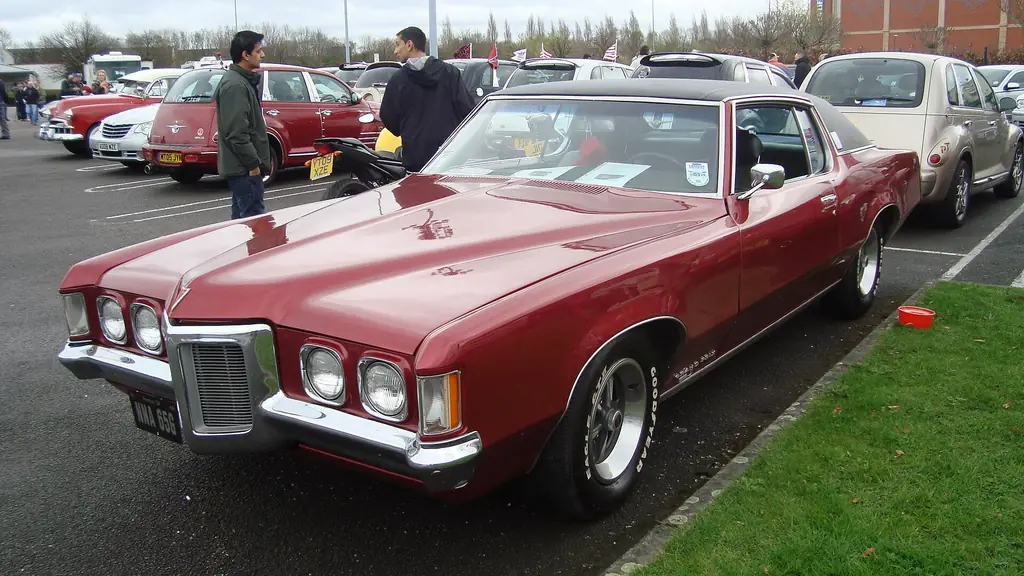
Pontiac designed the 1969 Grand Prix instrument panel around what its brochure called the command seat. Controls, switches and gauges faced the driver, with a console extending between the front buckets.
That arrangement made the cabin feel organized around one seat rather than a flat wall across the car.
The Jeep Grand Cherokee guide includes driver controls. Pontiac brought controls toward the driver through the shape of its instrument panel.
9. A Grand Prix could open its roof in two sections
The 1977 Pontiac brochure pictured a Grand Prix LJ with an available hatch roof. Removable sections above the front seats gave the coupe an open-air option while retaining a central roof strip.
The central strip remained in place when the panels came out.
Our Honda Pilot guide looks at another kind of cabin flexibility. The Grand Prix’s roof opening was an equipment option, rather than a feature every example had.
10. A Vibe passenger seat could become a small table
The 2003 Vibe manual described a front passenger seatback that folded forward for longer cargo. With the vehicle stopped, the folded back could also serve as a temporary table.
That gave the compact hatchback a useful surface without adding a separate piece of furniture.
Our Toyota RAV4 feature guide explores another practical cabin. The Vibe manual also requires cargo to stay clear of the airbag deployment area and be secured.
11. Cargo anchors could move along floor tracks
The 2003 Vibe included a rear cargo accessory track system. Tracks in the load floor worked with supplied tie-down anchors and available accessory packages, rather than leaving every attachment point fixed.
The arrangement gave the cargo area another way to accommodate different loads.
The movable anchors gave the system its flexibility. The tracks stayed in the floor while the tie-down points could be positioned around the items being carried.
12. A household-style outlet lived near the dashboard
The 2003 Vibe manual described a 115-volt AC outlet near the center of the instrument panel. A button switched it on after the ignition was turned on.
That was a convenience in a compact hatchback, rather than a feature reserved for a large truck.
It was not a substitute for unlimited household power. The manual excluded some demanding or sensitive equipment, so compatibility depended on the device being plugged in.
Sources and model-year references
Sources & photo credits
Photo credits Photographers, sources and licences
Other photography
- Hood-mounted tachometer on a 1968 Pontiac GTO by Geneb1955 at English Wikipedia; Public domain. Resized and converted to WebP. Original photo license applies.
- 1968 Pontiac GTO with the optional hidden-headlamp treatment by Sicnag; CC BY 2.0. Resized and converted to WebP. Original photo license applies.
- 1977 Pontiac Trans Am with its hood bird and shaker by Greg Gjerdingen from Willmar, USA; CC BY 2.0. Resized and converted to WebP. Original photo license applies.
Other photography
- Pontiac Trans Am interior, cataloged in the 1974–1976 generation by dave_7 from Lethbridge, Canada; CC BY 2.0. Resized and converted to WebP. Original photo license applies.
- 1969 Pontiac Grand Prix, exterior context by Kieran White from Manchester, England; CC BY 2.0. Resized and converted to WebP. Original photo license applies.