

Editor’s note: This is an editorial selection.
Older Jeeps mixed practical cargo ideas with unusual interiors and open-air designs. Some features disappeared with a particular model, while others remain part of the brand’s appeal.
1. Woodgrain panels that gave a utility vehicle its own look
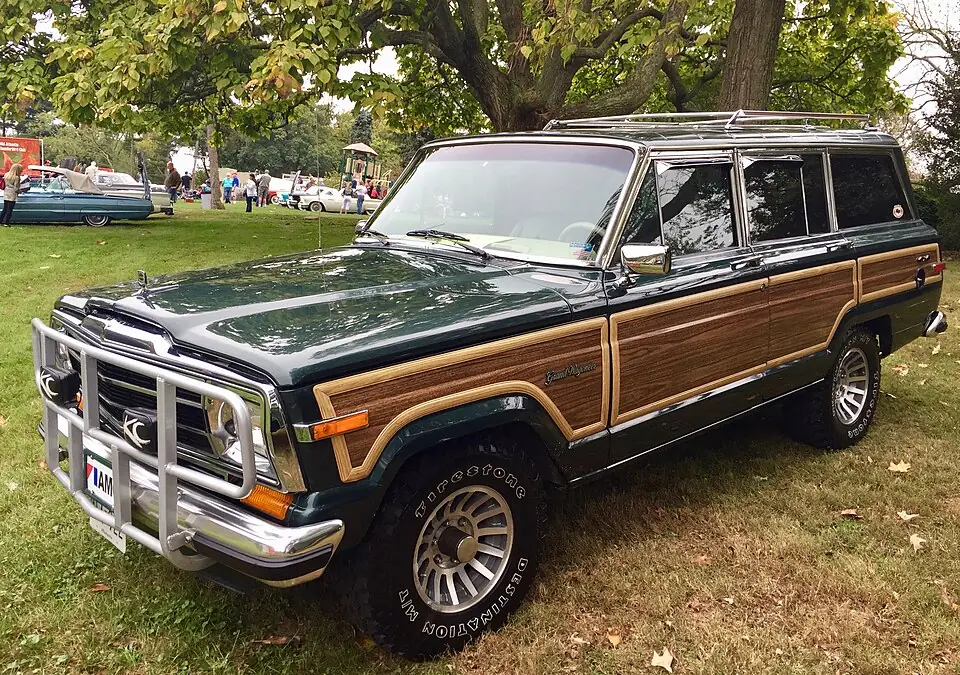
The 1988 Grand Wagoneer wore simulated woodgrain on its body sides and tailgate, framed by moldings. The treatment helped give a square utility vehicle the appearance of a familiar family wagon.
That appearance was a deliberate finish, not a body made from wooden panels.
The woodgrain finish covered body panels rather than forming the body itself. Together with its surrounding moldings, it gave this utility vehicle a deliberately wagon-like appearance.
2. Rear glass that lowered into the tailgate
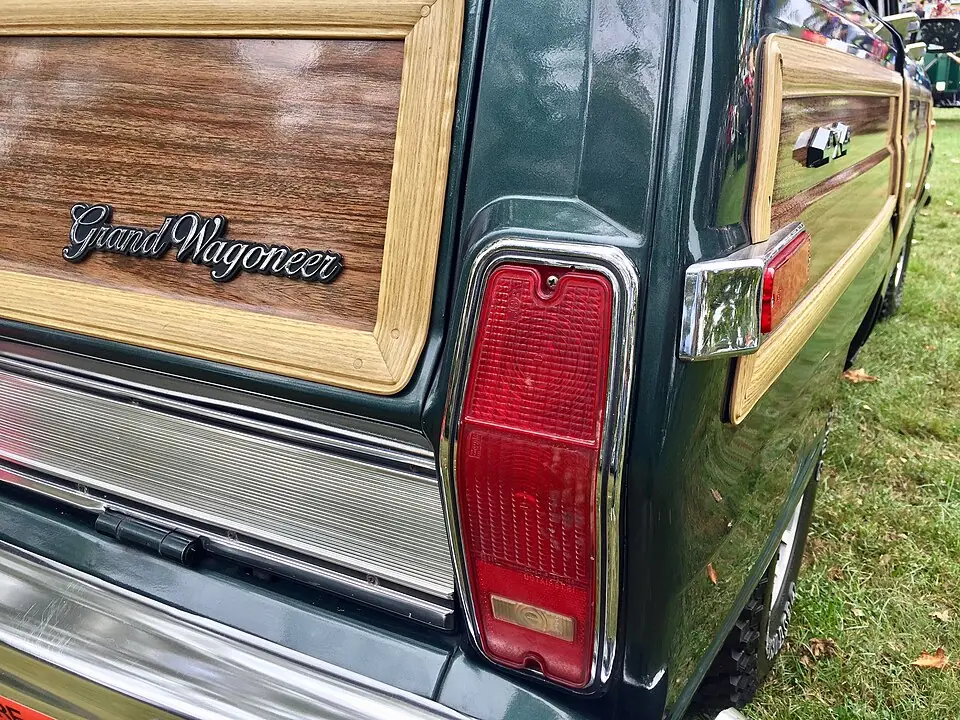
The 1988 Grand Wagoneer had a powered tailgate window with controls inside and outside the vehicle. Lowering the glass was part of operating the tailgate, creating a different loading routine from a modern upward-opening hatch.
The arrangement is one of the details worth asking about on a surviving example.
Do not drive with the rear opening in a position the manual prohibits. Exhaust entry and unsecured cargo are safety concerns.
3. A rear seat that folded and tumbled for cargo
The 1988 Grand Wagoneer’s rear seat could fold and tumble. Jeep listed it alongside six-passenger seating, showing how the cabin could accommodate people or provide more cargo room.
It was a practical part of the wagon’s appeal, beneath the leather and woodgrain appearance.
Folding and tumbling the seat changed how much of the rear compartment was available. The same body could serve as a passenger wagon or carry larger items.
4. A compact Cherokee offered with two doors
The XJ Cherokee offered two-door and four-door bodies in a compact shape. Buyers could choose the distinctive two-door profile without moving to an open-top Jeep, or favor the easier rear access of four doors.
The choice affected everyday use as much as appearance.
The two-door body emphasized the compact Cherokee’s proportions. A four-door version offered another arrangement for owners who wanted a separate opening beside the rear seats.
5. The familiar 4.0-liter straight-six
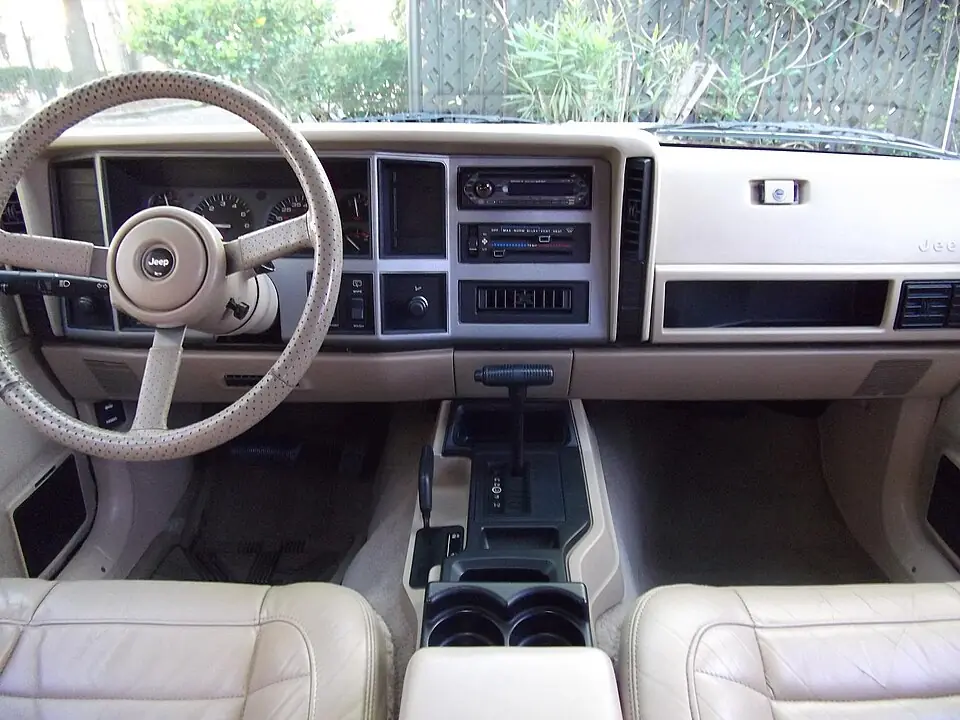
The Cherokee gained its 4.0-liter inline-six for 1987. That engine later appeared in Jeeps, including the Wrangler TJ, making its layout an important part of the brand’s identity.
An engine can become recognizable through its sound and character, beyond the specification sheet.
The straight-six layout was one of the mechanical links between different Jeep models. Its shared presence helped connect a closed Cherokee with the more open Wrangler.
6. The Scrambler’s long cargo area
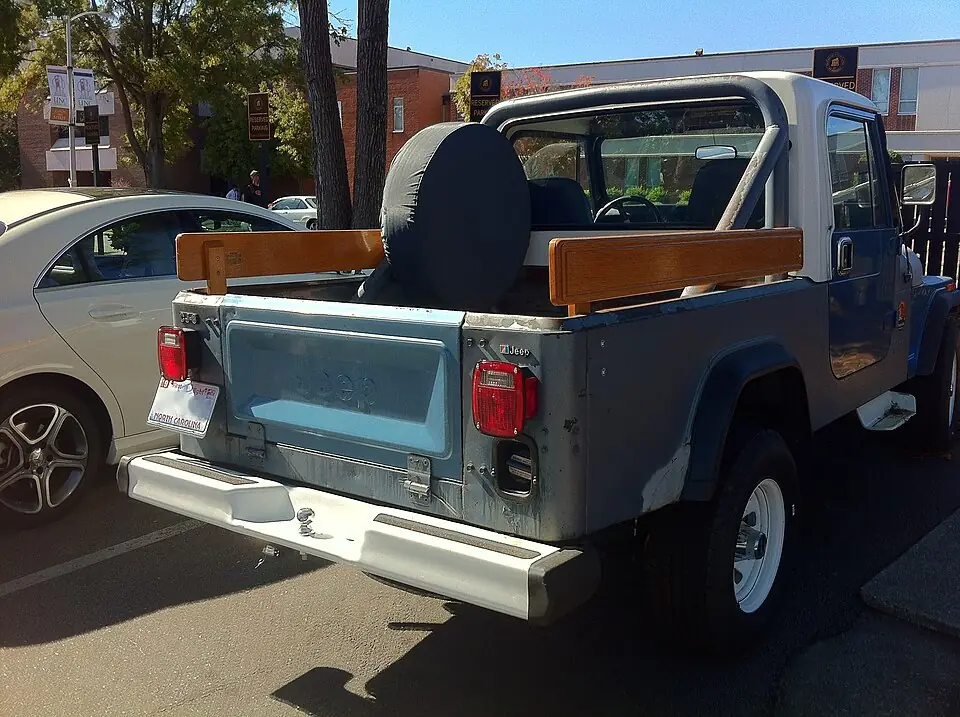
The CJ-8 Scrambler stretched the open Jeep idea with a longer wheelbase and rear cargo area. Introduced for 1981, it offered a different balance of passenger space and carrying room from the smaller CJs.
The extra area gave the body a distinctive pickup-like profile.
Our Ram cargo feature guide examines newer storage arrangements. The Scrambler carried its room behind the seats, making that rear section part of the vehicle.
7. An open cabin that remained part of the formula
The Wrangler TJ retained removable doors, a folding windshield and a choice of soft or removable hardtop. Those features linked the 1997 model to earlier Jeeps while giving owners options to open the cabin.
They are heritage features, not a list of things Jeep abandoned.
Our Bronco roof and door guide offers another example. Follow the manual and local rules; an open configuration is not appropriate for every road.
8. Coil suspension beneath the TJ’s familiar shape
The 1997 Wrangler TJ looked familiar, but Jeep replaced the earlier Wrangler’s leaf springs with a coil-spring system. The recognizable shape concealed a substantial mechanical update.
The history is a reminder that nostalgia is not only about keeping everything unchanged.
The TJ therefore combined a familiar upright body with a different spring arrangement underneath. Comparing its shape alone with an earlier Wrangler would miss that important mechanical change.
9. Green-and-champagne seats in the Orvis edition
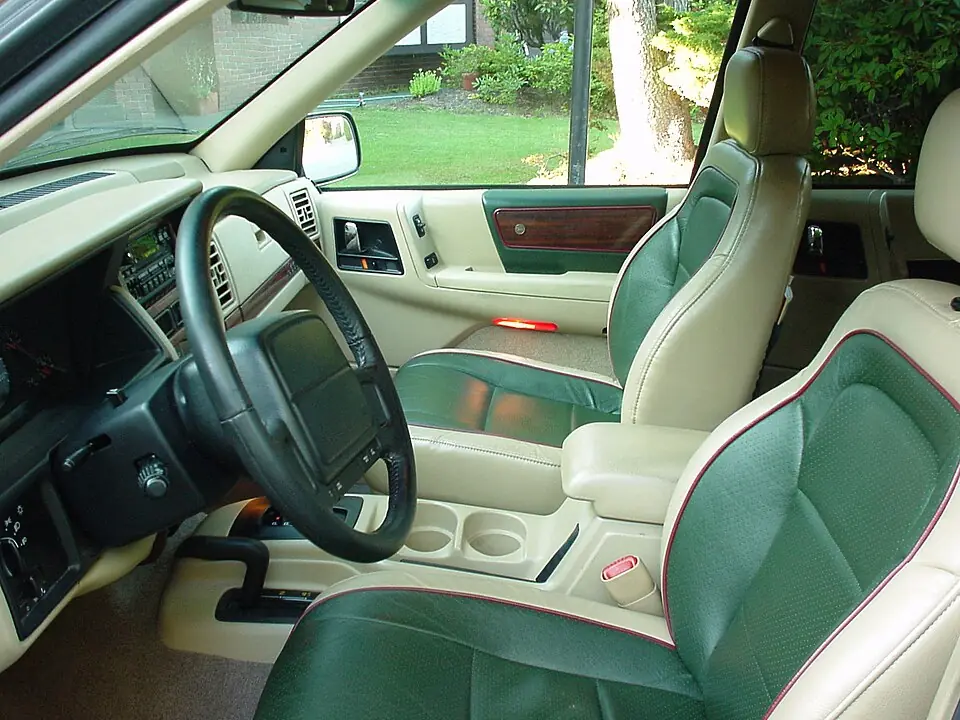
The Grand Cherokee Orvis edition combined distinctive exterior colors with green-and-champagne seats and red accents. Offered during the 1990s, it gave the ZJ cabin a look tied to a specific special edition.
The unusual color combination is worth noticing beyond the badge.
Our Grand Cherokee owner guide explores newer comfort functions. The Orvis edition added its own character through the colors and trim passengers saw whenever they opened a door.
10. Denim-style interiors in the Honcho era
Jeep’s Honcho and Golden Eagle packages brought Levi’s-branded denim-style interiors to selected trucks. The unusual upholstery made the seats part of the vehicle’s identity, alongside its stripes and wheels.
Levi’s branding gave the cabin a connection to a familiar clothing brand.
Our Pilot seating guide covers newer comfort choices. In these Jeep packages, the branded upholstery also gave passengers a visual reminder of the special edition.
11. A camper designed around the small CJ
Jeep offered a detachable camper arrangement for the CJ-5 in 1969. It was an unusual attempt to turn the small open vehicle into a base for a trip.
Owners could detach the camping equipment and use the CJ-5 on its own.
Our Highlander cargo and seating guide looks at another vehicle built to carry people and gear. Jeep approached that task with camping equipment attached to its small CJ.
12. A factory CB radio for road-trip conversation
The 1978 J-10’s 10-4 package offered an optional factory-installed CB radio. A dedicated radio gave drivers a way to communicate on the road before a phone in every pocket became an expectation.
Talking with other drivers meant using a radio built for that purpose.
Our car buttons guide explores other cabin controls. The optional CB let drivers talk over the air alongside the truck’s ordinary radio.
Sources and model-year references
Sources & photo credits
Photo credits Photographers, sources and licences
Other photography
- 1991 Jeep Grand Wagoneer with simulated woodgrain, later-year context for the 1988 model discussed by Christopher Ziemnowicz; CC BY-SA 4.0. Resized and converted to WebP. Original photo license applies.
- 1991 Jeep Grand Wagoneer tailgate with its rear glass closed by Christopher Ziemnowicz; CC BY-SA 4.0. Resized and converted to WebP. Original photo license applies.
- 1992 Jeep Cherokee Laredo interior, generation context by Ryder267; CC BY-SA 3.0. Resized and converted to WebP. Original photo license applies.
Other photography
- Jeep CJ-8 Scrambler with its long rear cargo area by Christopher Ziemnowicz; CC BY-SA 4.0. Resized and converted to WebP. Original photo license applies.
- 1995 Jeep Grand Cherokee Orvis Edition seats by pingping; CC BY-SA 2.0. Resized and converted to WebP. Original photo license applies.