

Editor’s note: This is an editorial selection.
Older Cadillacs put unusual thought into comfort, controls and the way a car looked from the curb. These model-specific features show what made them distinctive, including ideas that remain familiar today.
1. Rear trays that gave passengers their own space
The 1966 Fleetwood Brougham had illuminated, fold-down rear trays with walnut surfaces and storage pockets. A passenger could bring down a usable surface instead of balancing everything on a coat or seat.
The appeal was the attention given to people riding behind the driver.
These were Brougham fittings that distinguished its rear compartment. The fold-down design kept a passenger surface available without leaving it permanently open.
2. Small vent windows with their own power controls
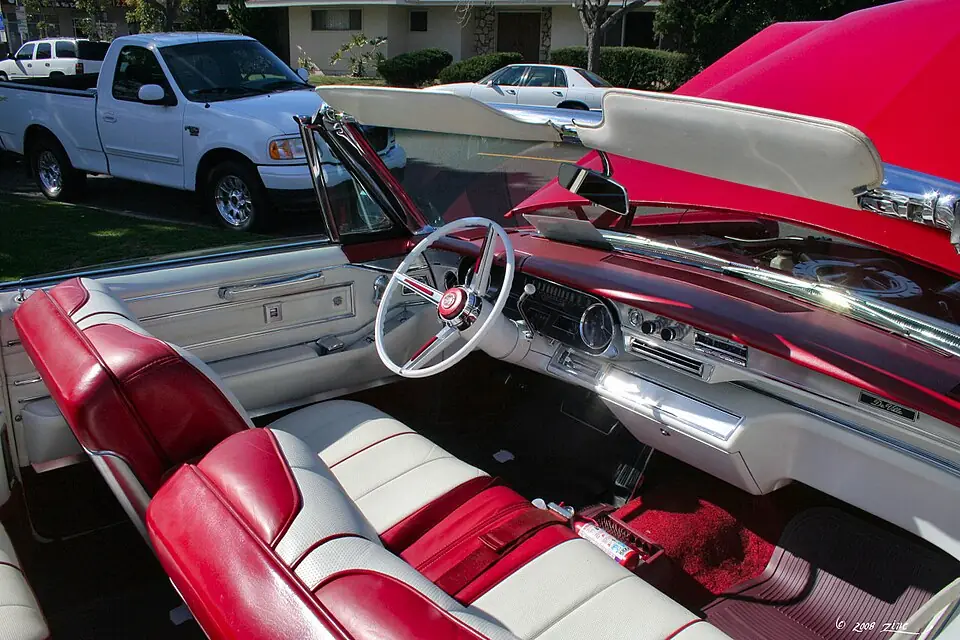
Cadillac offered powered vent windows in 1966, and fitted them as standard on the Fleetwood Sixty Special, Eldorado and Brougham. Those small front panes had their own movement, separate from the main door glass.
They gave the cabin another way to admit outside air.
The vent pane let a passenger adjust a smaller opening while leaving the main window in place. Its power control made that movement another cabin convenience.
3. Folding footrests for the rear passengers
The 1966 Fleetwood Brougham and Seventy-Five models offered carpeted footrests that folded away. The idea was simple: give rear passengers another comfortable position without leaving a permanent obstacle on the floor.
A long ride could be more comfortable for the people sitting in the back.
The folding design let the footrests stay out of the way when passengers did not want them. They belonged to these particular Fleetwood rear compartments.
4. A stainless-steel roof that needed no bright paint
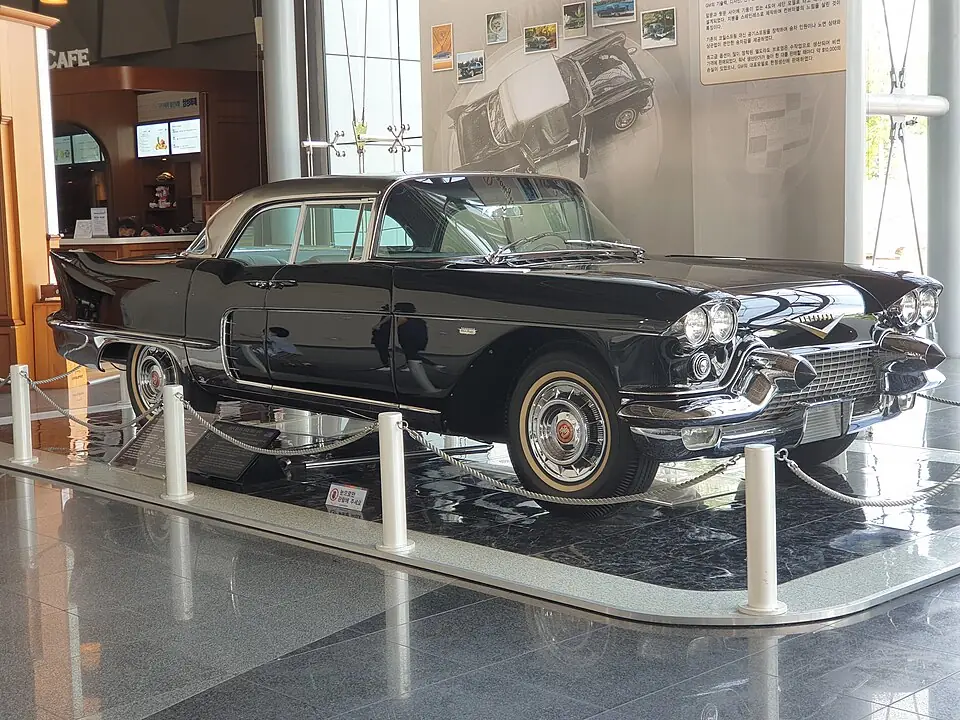
The 1957 Eldorado Brougham wore a brushed stainless-steel roof. Against the painted body, that broad metal surface gave the car an identity that did not depend on a large badge or a fashionable paint color.
The broad metal surface gave this particular Brougham’s roof a finish of its own.
The roof was not fitted across the Cadillac range. A regular Eldorado convertible belonged to a different body style.
5. Rear doors that opened in the opposite direction
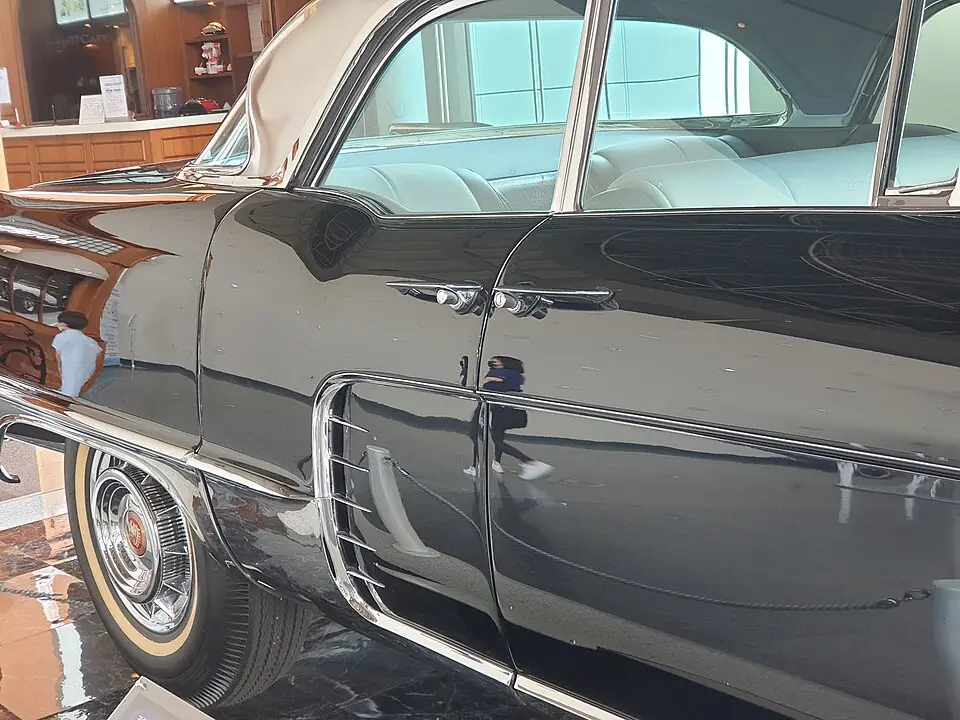
The 1957 Eldorado Brougham used rear-hinged back doors. Their opening direction changed the appearance of the side of the car and made the doorway itself part of its unusual design.
The opposing door handles are a useful clue to the opening direction when the doors are closed.
This arrangement belonged to the Eldorado Brougham. Other Cadillacs from 1957 used different doors, so the model name matters when describing the design.
6. Memory seats before the feature became familiar
Memory seats were among the 1957 Eldorado Brougham’s features. The driver could recall a seating preference instead of finding the same comfortable position after someone else had used the car.
The idea remains useful when two people share a vehicle.
Our Grand Cherokee feature guide covers the modern version of driver memory. That continuity is part of the interest here; memory seats never simply vanished from luxury cars.
7. Tailfins that made the whole car recognizable
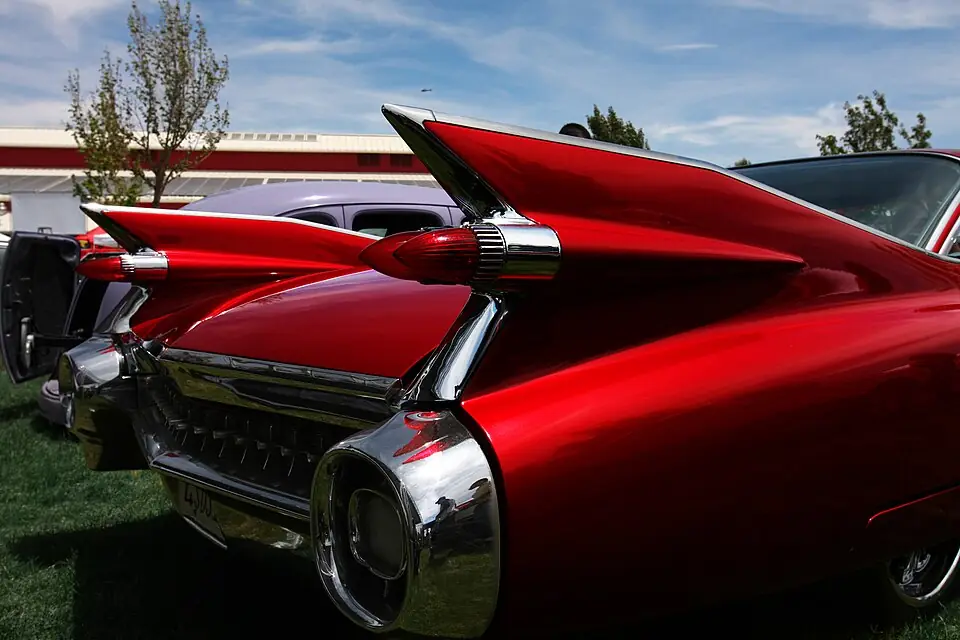
The 1959 Eldorado Biarritz carried the towering tailfins that now define a familiar image of the late 1950s. The shape made the rear of the car as memorable as its grille.
This was styling that could be recognized from across a parking lot.
The fins gave the rear bodywork a distinctive outline. Their shape belongs to this generation, even though Cadillac used tailfins in other model years too.
8. Headlamps that could dim automatically decades ago
Cadillac’s historical records include automatic-dimming headlamps in the early 1950s. The feature addressed a nighttime task long before modern driver-assistance menus became part of everyday driving.
An early attempt to automate a routine nighttime task is part of the system’s appeal today.
Like the functions in our car buttons and settings guide, it still depended on understanding the fitted controls and their limits.
9. A steering wheel that adjusted in two directions
Cadillac introduced its tilt-and-telescoping steering wheel for 1965. Adjusting the angle and reach gave drivers two ways to bring the wheel closer to a comfortable position.
Both movements gave a driver more freedom to choose a comfortable position behind the wheel.
The same concern underlies the seating adjustments in our Ram owner feature guide. Set the driving position while parked, and check the specific controls in the manual.
10. Automatic climate control with a long history
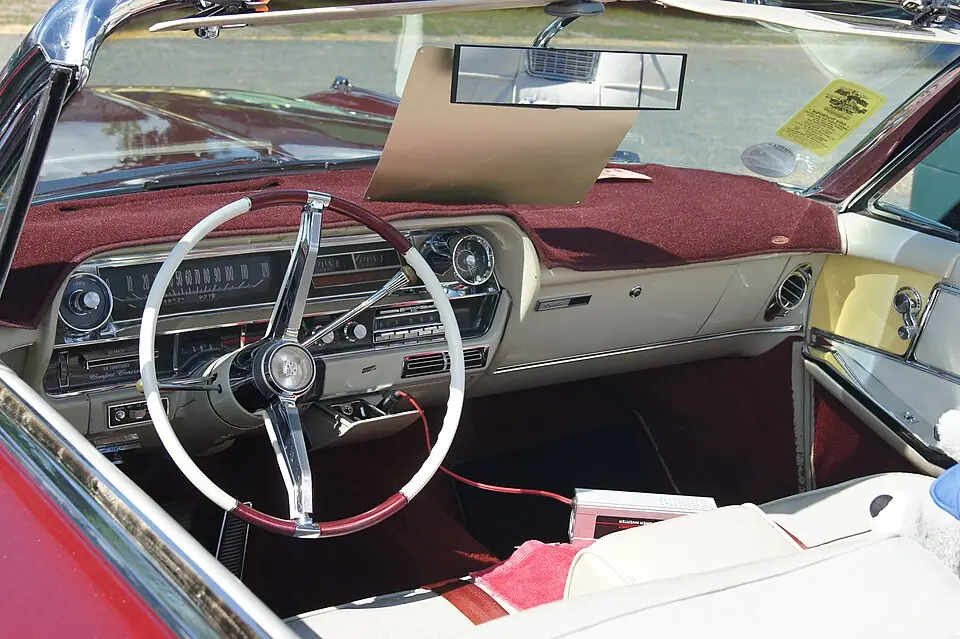
Cadillac’s timeline places automatic climate control in its 1964 range. The system aimed to maintain a selected cabin temperature, reducing the need for repeated adjustments by the driver.
The underlying goal remains familiar on long trips.
Our Highlander settings guide explores modern rear climate controls. The older Cadillac system belongs to that longer story, even though its components and controls differ from current equipment.
11. A trip computer in the Seville of the 1970s
The 1978 Seville offered a trip computer, according to Cadillac’s own historical account. It brought computing into the cabin well before a central touchscreen became an expected part of a new car.
The appeal today is seeing an early attempt to put useful information within the driver’s reach.
Our Tucson guide shows how cabin interfaces have changed. The Seville’s trip computer put electronic information within the driver’s reach.
12. Massaging lumbar support in a 1990s Cadillac
Cadillac records massaging lumbar seats on certain DeVille, Seville and Eldorado models for 1999. The detail shows how much attention its engineers were giving to the area supporting the driver’s lower back.
Availability matters: the feature was not fitted to every example of those models.
Our Honda Pilot feature guide explores newer seating functions. The Cadillac feature added comfort adjustment beyond the usual choices of seat position and backrest angle.
Sources and model-year references
Sources & photo credits
Photo credits Photographers, sources and licences
Other photography
- 1966 Cadillac deVille convertible interior with a triangular vent pane by Rex Gray; CC BY 2.0. Resized and converted to WebP. Original photo license applies.
- 1957 Cadillac Eldorado Brougham with its stainless-steel roof by Damian B Oh; CC BY-SA 4.0. Resized and converted to WebP. Original photo license applies.
- 1957 Cadillac Eldorado Brougham with opposing door handles; doors are closed by Damian B Oh; CC BY-SA 4.0. Resized and converted to WebP. Original photo license applies.
Other photography
- 1959 Cadillac tailfins and bullet-shaped lamps by Rennett Stowe from USA; CC BY 2.0. Resized and converted to WebP. Original photo license applies.
- 1964 Cadillac de Ville convertible interior, period context by Greg Gjerdingen from Willmar, USA; CC BY 2.0. Resized and converted to WebP. Original photo license applies.