

Editor’s note: This is an editorial selection.
Older Toyota trucks combined practical work features with a few unusual conveniences. These American-market 4Runner, Tacoma and Tundra examples include ideas that disappeared and others Toyota kept.
1. The first 4Runner had a detachable rear roof
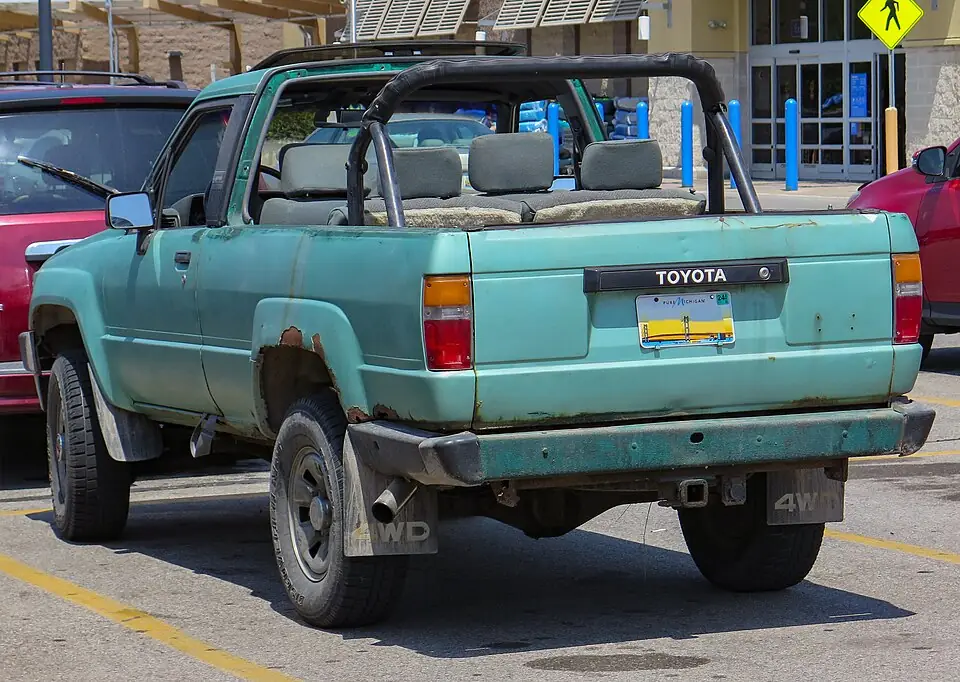
The original 1984–1989 4Runner had a removable rear top over its passenger and cargo area. Its truck-based shape made the separate canopy easy to recognize.
It gave this early SUV an open-air configuration that later generations did not share. Toyota changed to a single-body design when the second generation arrived for 1990.
The removable part was the rear canopy, rather than the roof above the driver and front passenger.
2. The 4Runner rear glass could roll down
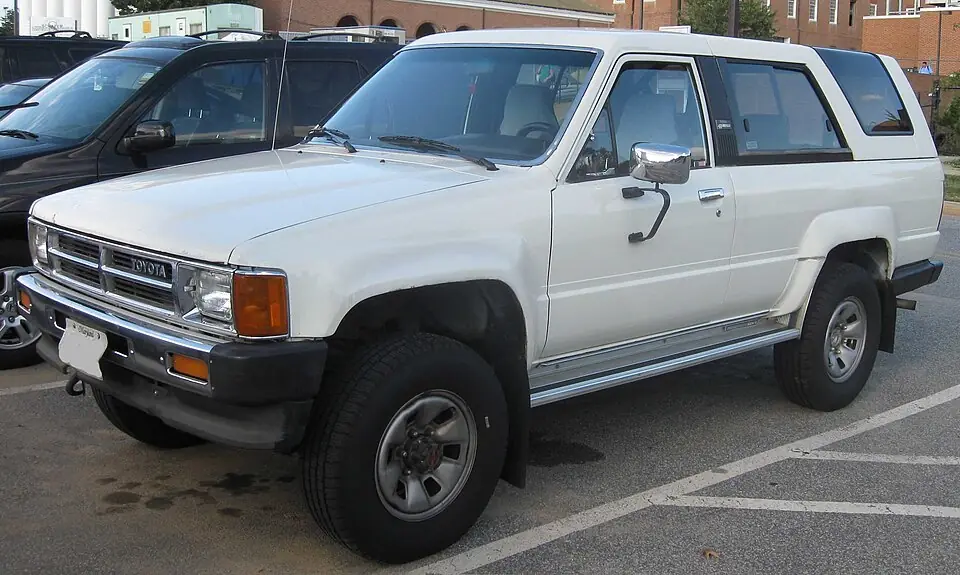
The first 4Runner had a rear window that lowered into the tailgate. You could open the glass without raising a conventional one-piece hatch over your head.
The separate opening became one of the model’s recognizable details, and it is an example of an older idea Toyota kept.
Toyota still lists a power rear window on the 2025 4Runner. This belongs among the retained features, rather than things that disappeared.
3. The Tacoma came as a straightforward regular cab
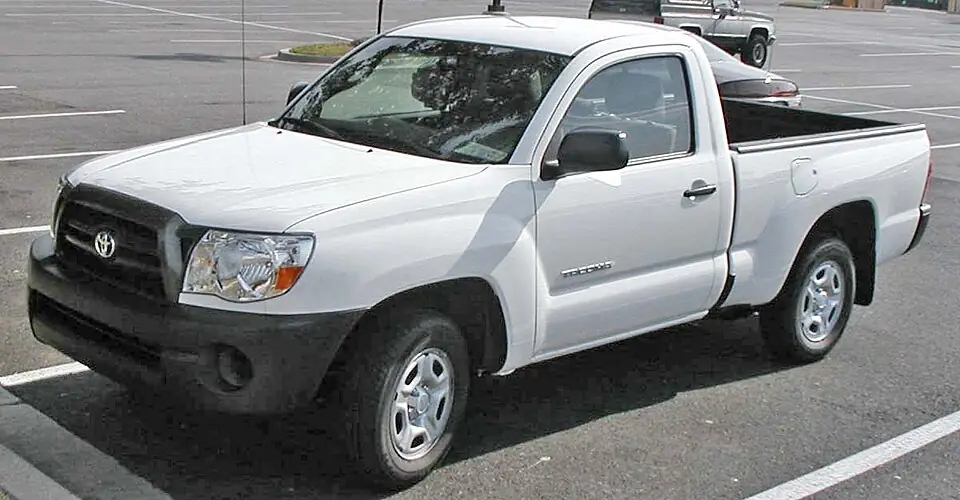
The 2014 Tacoma lineup still included a Regular Cab, without a second passenger row behind the front seats. Toyota discontinued that version for the 2015 model year.
For a buyer who wanted a small truck rather than extra seating, that was a clear configuration choice. It made the cab’s purpose easy to understand.
The later two-door XtraCab is a different, longer-cabin design. It is not the same Regular Cab returning.
4. The 4Runner cargo deck could slide toward you
Toyota offered a pull-out cargo deck on the 2010 4Runner. Instead of reaching across the rear load space, an owner could bring part of that floor outward.
It was a useful arrangement for sorting bags or reaching equipment tucked inside. The sliding surface also created a flat area beneath the open rear hatch.
This was optional equipment with a stated 440-pound capacity. The vehicle needed to have that fitted deck.
5. Tacoma Access Cab doors opened the space behind the seats
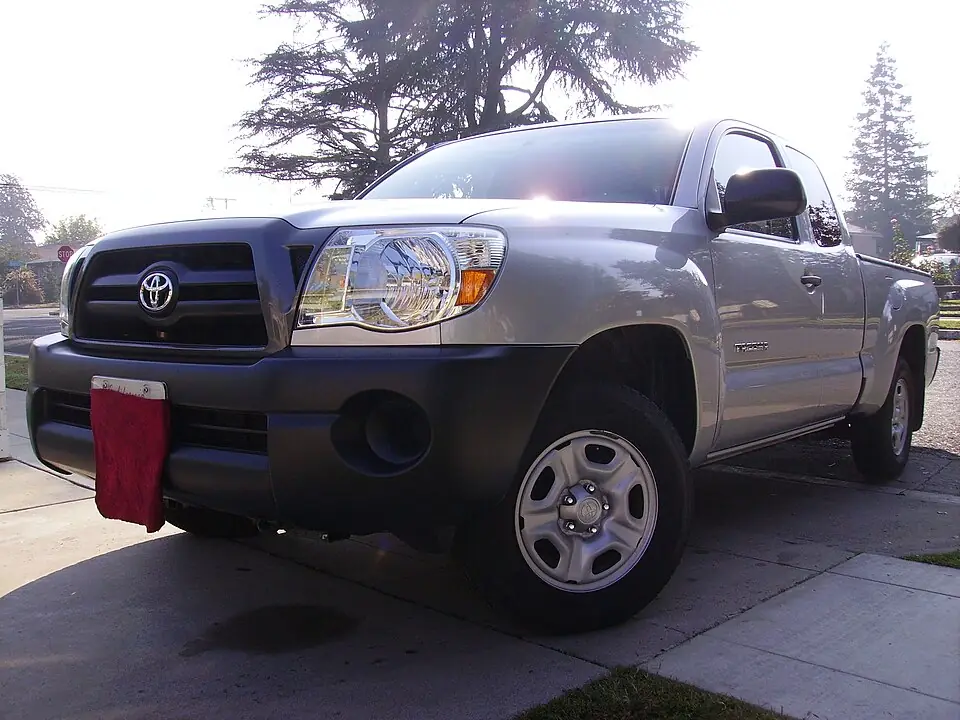
The 2015 Tacoma Access Cab used rear-hinged access doors that opened to 80 degrees. They provided a separate route to the smaller space behind the front seats.
That mattered when reaching a bag without first tipping or sliding a front seat. It was a practical benefit of that particular cab design.
Our Tacoma feature guide covers other equipment. The 2024 XtraCab instead has no rear doors or rear seats.
6. Some 4Runners let the driver choose every shift
Toyota’s redesigned 1996 4Runner offered a five-speed manual with the two-wheel-drive, four-cylinder model. Buyers could still choose that transmission in an SUV built for everyday use.
The clutch pedal and gear lever gave the driver direct involvement in changing ratios. Each shift required an action from the person behind the wheel.
The Toyota controls guide covers other equipment. This 1996 manual option paired two-wheel drive with the four-cylinder engine.
7. The 4Runner could send its music toward the rear
The 2010 4Runner’s Party Mode setting boosted bass and shifted the audio balance toward speakers in the rear liftgate. It gave the sound system a specific outdoor-use setting.
With the SUV parked and the hatch open, music could be directed toward people gathered behind it. That was a distinctive factory convenience for a break outside.
The dashboard button guide covers other controls whose purpose is easy to overlook.
8. Tacoma bed cleats could move to suit the load
The 2014 Tacoma’s bed-rail system included four adjustable tie-down cleats. Their position could change along the rails instead of limiting every strap to a fixed corner.
That made it easier to arrange attachment points around differently shaped cargo. The same truck could carry a box one weekend and outdoor equipment the next.
Our Maverick cargo guide shows another bed layout. Each system has its own securement limits.
9. The Tacoma offered a power outlet in the bed
An available 115-volt, 400-watt outlet put a household-style power connection in the 2014 Tacoma’s bed. A useful convenience no longer had to stay inside the passenger cabin.
It could support compatible low-power equipment near the load area, which suited some work stops and outdoor trips. The rating did not mean every appliance would run.
Our Ford truck feature guide covers different power equipment with different operating limits.
10. The Tundra still offered a front bench choice
For 2014, Toyota offered front bench or bucket seating in Tundra Double Cab and CrewMax configurations. One center-console layout did not have to suit every buyer.
A bench suited someone who valued the additional seating position. Bucket seats offered individual chairs with a console between them.
The seating depended on the grade. Bench and bucket choices gave similar trucks different front cabin layouts, with their own space between the occupants.
11. The Tundra dashboard had two glove boxes
The 2013 Tundra separated its passenger-side dashboard storage into two glove boxes. Toyota listed a 3.4-liter upper compartment and a 9.5-liter lower compartment.
That let an owner give different items their own space, rather than burying every small object in one pile. The extra opening was useful without needing an elaborate organizer.
Each compartment could have its own job, separating the paperwork from smaller everyday items.
12. The CrewMax rear bench could slide and recline
In the 2012 Tundra CrewMax, the rear seat had a ten-inch sliding range as well as reclining seatbacks. Passengers and interior cargo could share the available space differently.
The point was adjustment, rather than simply making the cabin large. An owner could choose where the bench sat for people or items traveling that day.
The Ram cabin guide covers another storage layout; the Toyota mechanism is specific to this CrewMax.
Sources and model-year references
Sources & photo credits
Photo credits Photographers, sources and licences
Other photography
- 1987 Toyota 4Runner with the rear canopy removed by Elise240SX; CC BY-SA 4.0. Resized and converted to WebP. Original photo license applies.
- First-generation Toyota 4Runner with its canopy fitted; rear glass is closed by IFCAR; Public domain. Resized and converted to WebP. Original photo license applies.
Other photography
- Toyota Tacoma Regular Cab with one passenger row by IFCAR; Public domain. Resized and converted to WebP. Original photo license applies.
- 2006 Toyota Tacoma Access Cab, exterior context with access doors closed by Hot pursuit p71; CC BY-SA 3.0. Resized and converted to WebP. Original photo license applies.