

Editor’s note: This is an editorial selection.
Older Hondas found clever ways to make limited space useful, from a cargo-floor picnic table to seats that lifted clear. These examples identify the American-market models and years behind those practical ideas.
1. The CR-V cargo floor became a picnic table
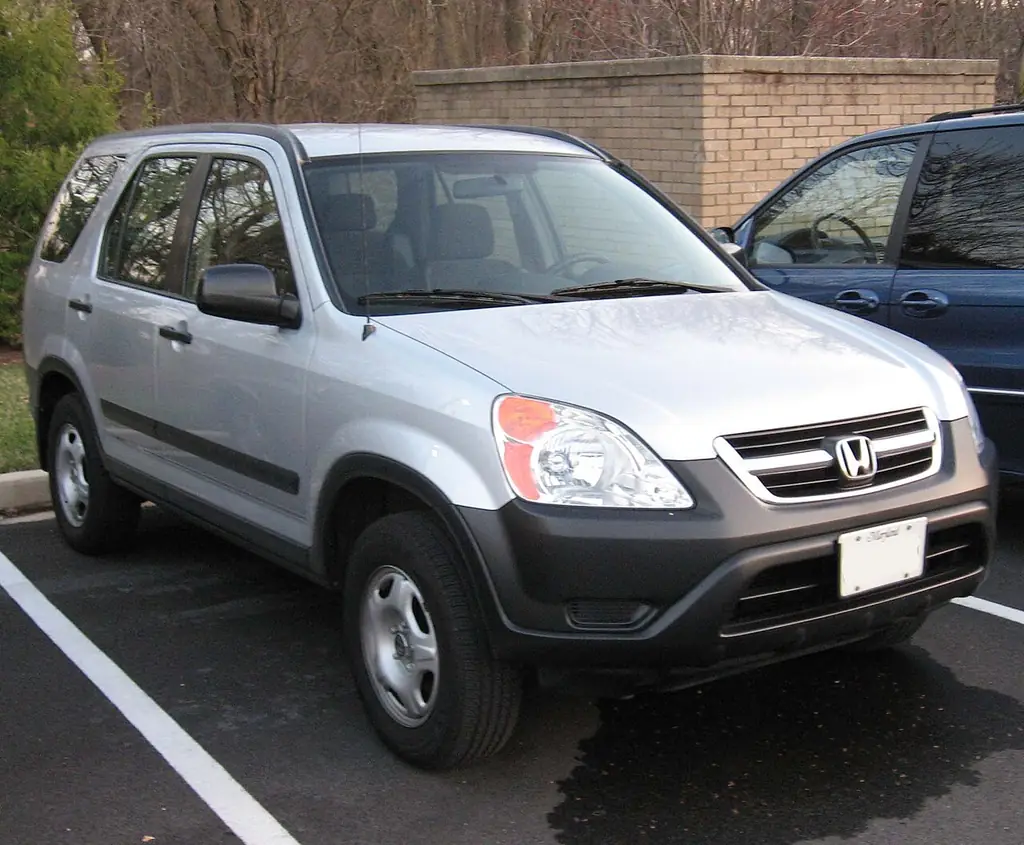
Under the cargo in a 2002 CR-V sat a removable floor panel with folding legs. Once unfolded, it became a separate picnic table.
That gave you somewhere to put lunch at a trailhead or sort small items beside the car, without packing another bulky piece of furniture.
It is a feature worth checking when viewing an older CR-V, because a previous owner may have removed the original table.
2. The Element opened up its entire side
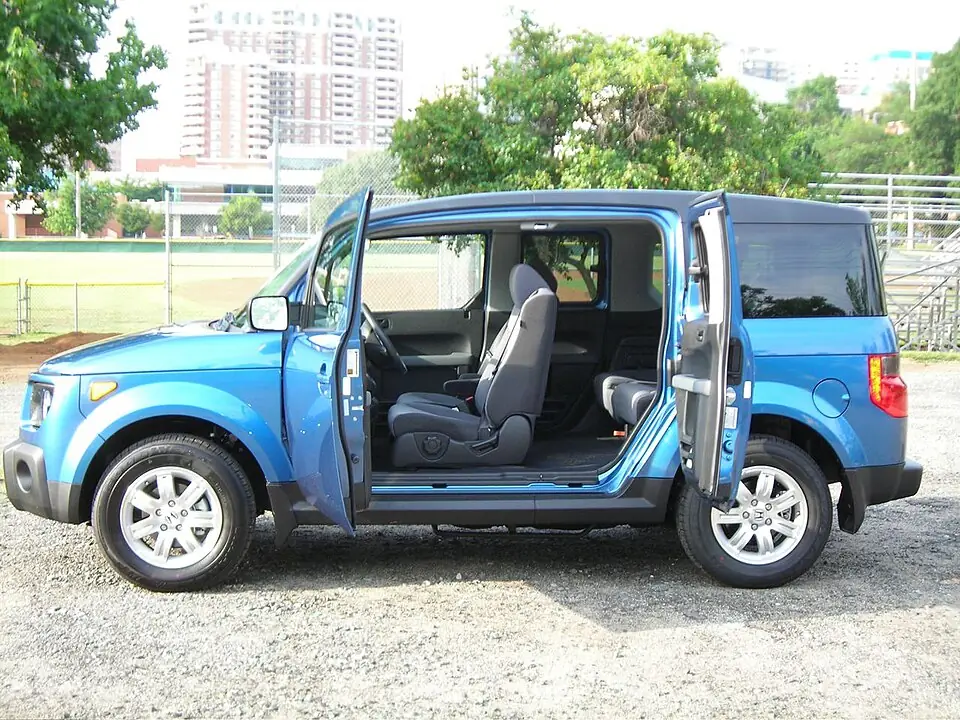
The 2003 Element paired conventional front doors with smaller rear-hinged doors. Open both and there was no fixed center pillar dividing the side opening.
The wide gap made bulky loads easier to approach from the sidewalk. It also let you reach across the cabin without squeezing through a narrow rear doorway.
The catch was the opening sequence: the front door had to open before its rear partner could move.
3. The Fit made room for cargo that stood upright
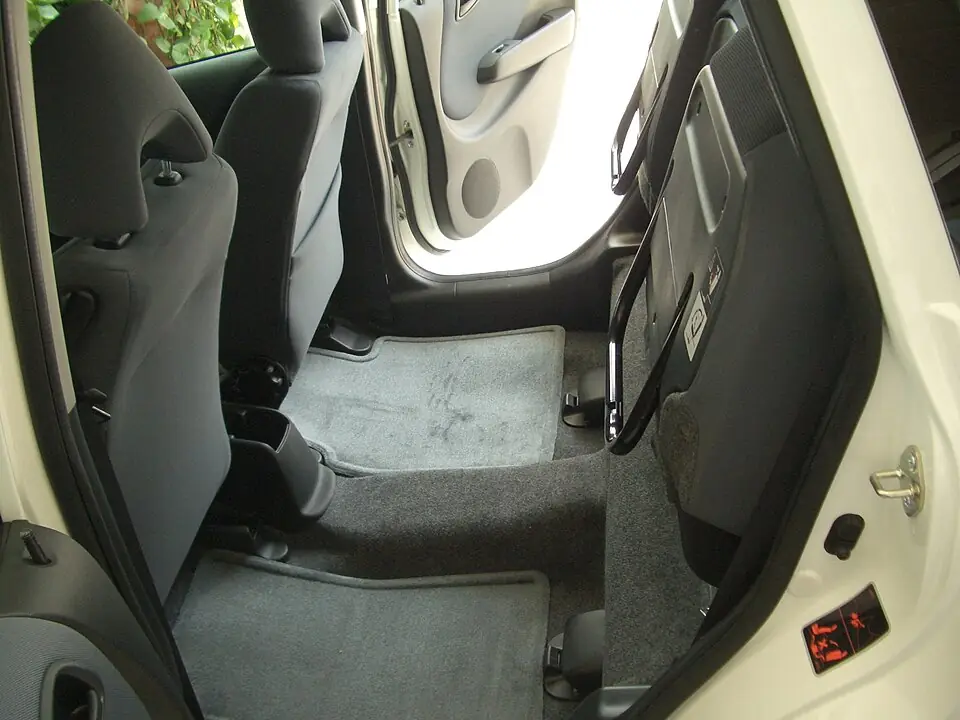
The Fit’s rear cushions could flip upward, leaving a tall loading space behind the front seats. Its seatbacks also folded down for wider loads.
A potted plant or another awkward upright object could use space that an ordinary folded seat would leave partly blocked. This flexibility mattered in such a small hatchback.
Honda documented this in the 2009 U.S. Fit and retained Magic Seat flexibility for 2020.
4. The CR-V hid a waterproof bucket under the floor
Lift the picnic-table floor in a 2002 CR-V and a waterproof storage bucket sat underneath. It provided a separate space for items you wanted contained.
Wet footwear or muddy gear could stay away from bags on the cargo floor. The useful part was the separation, rather than another open cubby.
The waterproof claim applied to that bucket. It did not make the surrounding cabin suitable for hosing out.
5. The Element floor was designed to wipe clean
Honda gave the 2003 Element a urethane-coated utility floor that could be swept or wiped with a wet cloth. Carpet was not covering the main surface.
That made the aftermath of an outdoor day easier to address. Grit and damp footprints did not immediately become a carpet-cleaning project.
The Bronco cleanup guide covers a different floor arrangement. The Element was not designed for a hose-out wash.
6. The Element rear seats could leave the load floor clear
The Element’s separate rear chairs could latch against the cabin sides or come out completely. Folding a backrest was only one of its cargo arrangements.
That gave an owner different ways to make room for a bike, a tall box or equipment that needed the floor itself.
The later Pilot seat guide shows another Honda approach to removable seating. The two vehicles use different mechanisms and storage positions.
7. The Element tailgate gave loading a useful ledge
At the back of the 2003 Element, the glass section lifted while the lower tailgate dropped level with the cargo floor. The opening worked in two parts.
The lower section made a flat ledge for arranging gear before putting it inside. It also reduced the need to reach across the entire cargo area.
Our Outback cargo guide covers another rear-access layout, with different hinges and clearance needs.
8. The CR-V center tray could fold out of the way
The 2002 CR-V put cup and phone spaces on a center tray between the front seats. The tray could fold away instead of permanently filling that gap.
That left a walk-through route in the cabin when the car was parked. It was a different use of the space from a deep, fixed console.
The CR-V feature guide looks at other convenience equipment; its controls belong to different model years.
9. The Element seats made a place to rest while parked
Honda described the 2003 Element’s seats as able to recline into a lounge arrangement. The interior could change from passenger seating to a place to rest.
For a break during an outdoor day, that was an alternative to balancing on a folded cargo floor. The layout was part of the original vehicle design.
This was a parked arrangement. Seats and restraints needed their proper traveling positions before the vehicle moved.
10. The Accord offered a wagon body for everyday hauling
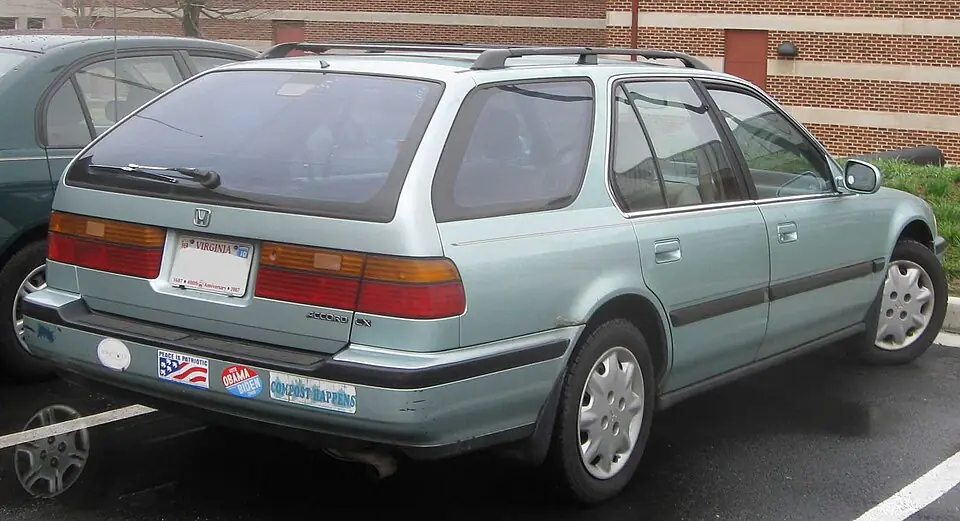
Honda added a U.S. Accord wagon for 1991. The familiar car gained an extended roof and rear cargo opening without becoming a taller sport-utility model.
That shape offered a straightforward answer for drivers who wanted a passenger car with a more useful space behind the rear seats.
The RAV4 cargo guide shows another approach to carrying bulky items. Neither body style suits every household’s loading needs.
11. The Civic Si moved its shifter onto the dashboard

The 2002 U.S. Civic Si hatchback put its five-speed manual gear lever on the center dashboard, close to the steering wheel.
It brought this control higher into reach. For someone accustomed to a lever near the seat cushion, the arrangement felt different.
The unusual position was part of this Si hatchback’s cabin design. Its compact gear lever was a detail the driver encountered each time they changed gear.
12. The little Fit had ten beverage holders
Honda listed ten beverage holders in the 2009 U.S. Fit and Fit Sport. That was a surprisingly generous number in a compact hatchback with five seats.
The appeal was having convenient places for drinks across the cabin, rather than making everyone share one crowded pair near the shifter.
The dashboard-controls guide explores other easily overlooked cabin details. That left room for a water bottle as well as coffee.
Sources and model-year references
Sources & photo credits
Photo credits Photographers, sources and licences
Other photography
- 2002–2004 Honda CR-V, exterior context by IFCAR; Public domain. Resized and converted to WebP. Original photo license applies.
- 2008 Honda Element with its side doors open by Slungsolow; CC BY-SA 3.0. Resized and converted to WebP. Original photo license applies.
- Honda Fit with its rear cushions raised for tall cargo by Eliazar Parra Cardenas; CC BY 2.0. Resized and converted to WebP. Original photo license applies.
Other photography
- Honda Accord LX wagon, exterior context by IFCAR; Public domain. Resized and converted to WebP. Original photo license applies.
- 2002–2003 Honda Civic Si, exterior context by IFCAR; Public domain. Resized and converted to WebP. Original photo license applies.