

Editor’s note: This is an editorial selection.
Older Chevrolets offered some unusual ways to load cargo, enter a seat or open the cabin. These American-market examples show the specific models behind those ideas.
1. The Stepside gave you a place to reach the bed
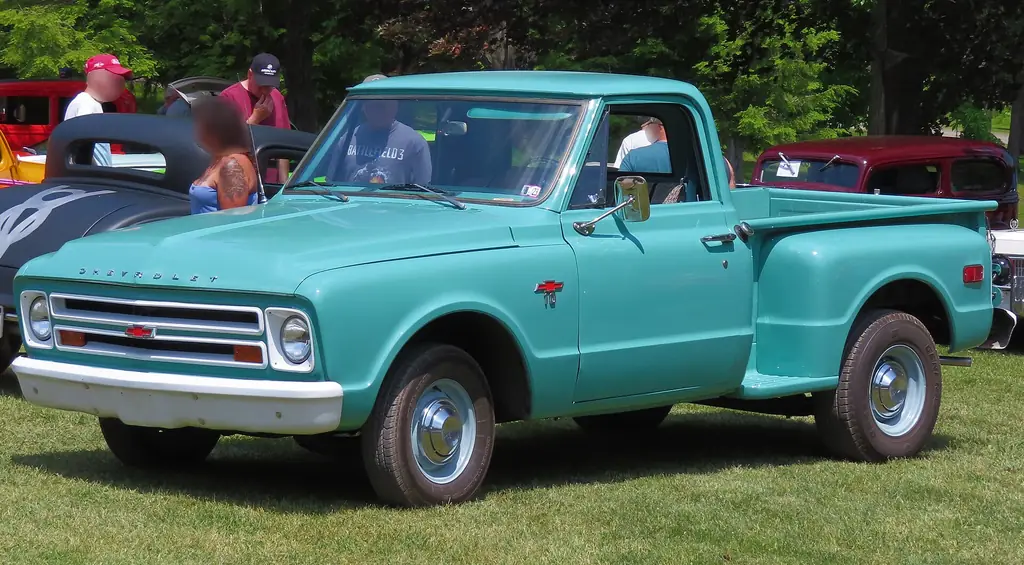
The 1973 Chevrolet Stepside put a usable step ahead of each rear fender. That body shape gave someone standing beside the truck a way to reach into the cargo box.
The narrow box also had straight inner sides, unlike the wheel housings inside a Fleetside bed.
Its appeal is easy to understand beside a tall pickup: the shape itself helped with loading, before adding a separate accessory.
2. A wooden floor was a factory truck choice
Chevrolet offered a wooden cargo floor with steel skid strips for the eight-foot Fleetside body in 1973. Steel remained the standard floor, so wood was an equipment choice rather than a rule.
That distinction matters when looking at restored trucks with carefully finished boards.
The original idea belonged to a working cargo box. A glossy show-truck bed can look beautiful without representing the finish Chevrolet originally supplied.
3. The K5 Blazer could shed its hardtop
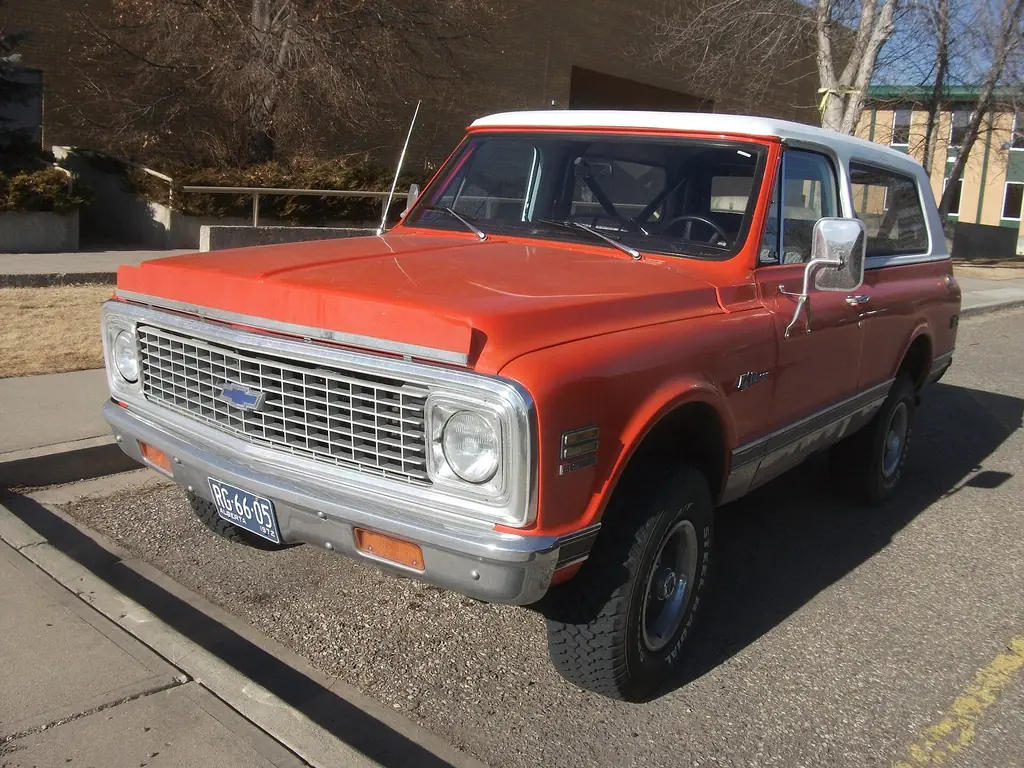
The 1973 Blazer brochure offered a removable fiberglass-reinforced hardtop. With that roof lifted away, the vehicle could have a much more open cabin than its closed-body appearance suggested.
This was a substantial removable body piece, rather than a small panel over the front seats.
The removable roof belongs to this early Blazer design. Later generations used different arrangements, so the open-air configuration was tied to the model year.
4. Some Suburbans had only three side doors
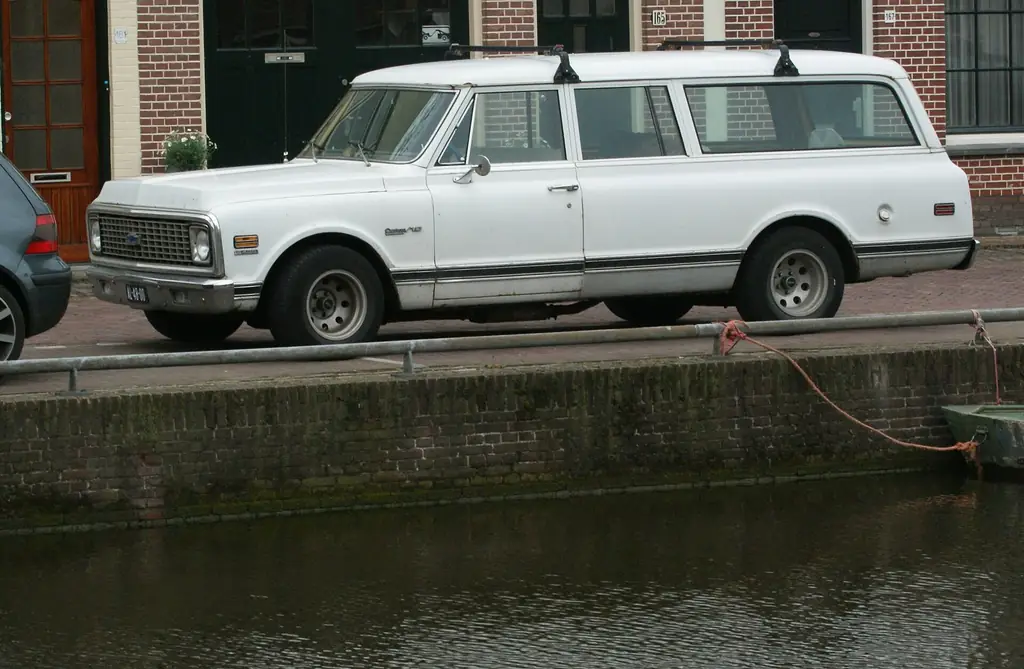
A 1972 Suburban had one side door on the driver’s side and two on the passenger side. GM’s preserved example makes the unusual three-door arrangement clear.
The uninterrupted driver-side panel made the vehicle’s two sides noticeably different, even with all three doors shut.
It is worth remembering as a design quirk, rather than treating it as automatically more practical. The four-side-door Suburban that followed changed how passengers reached the rear.
5. Rear access did not have to mean one big hatch
For 1974, Suburban buyers could choose standard double rear doors or a wagon-style tailgate with retracting glass. The doors swung aside; the tailgate lowered after its window went down.
Those layouts offered different ways to approach a load, with different space needed behind the vehicle.
For a modern comparison, our Chevy Trax cargo guide shows how another Chevrolet handles everyday storage within a much smaller body.
6. A large family hauler could have a manual gearbox
GM’s heritage collection includes a 1972 Suburban Custom Deluxe with an optional four-speed manual transmission. The large passenger-and-cargo vehicle did not have to come with an automatic.
A manual shifter gives that familiar family-truck shape a different character from behind the wheel.
Our Ram truck feature guide covers modern truck controls. The manual transmission added a gear lever and clutch pedal to this large Suburban’s cabin.
7. A wagon tailgate could disappear below the floor
On Chevrolet’s full-size 1971 wagons, the rear glass slid upward into the roof while the lower tailgate moved beneath the cargo floor. Chevrolet presented this as its disappearing tailgate.
An open cargo area therefore did not leave a conventional gate projecting behind the car.
The system cleared the opening in two directions, sending glass upward and the gate down. Our Toyota Highlander guide covers a newer approach to rear access.
8. Monte Carlo seats could turn toward the door
Optional swing-out Strato-bucket seats in the 1973 Monte Carlo could pivot as much as 90 degrees. Releasing a side handle let the seat turn toward the open door.
That made entering or leaving the coupe part of the seat’s design, alongside its normal fore-and-aft adjustment.
Compare that idea with the passenger-access features in our Honda Pilot guide. The Monte Carlo solved a different access problem with a memorable movement.
9. Quadrasteer let the rear wheels steer too
Chevrolet lists Quadrasteer four-wheel steering among the features available during the 2002–2005 Silverado era. It was an unusual answer to the space a full-size pickup needs when maneuvering.
The idea is especially striking because rear-wheel steering can be easy to miss on a parked truck.
Our Chevy Colorado owner tips cover more familiar truck details. Quadrasteer remains a useful reminder that older pickups sometimes carried surprisingly ambitious technology.
10. The cab could keep a full-width bench
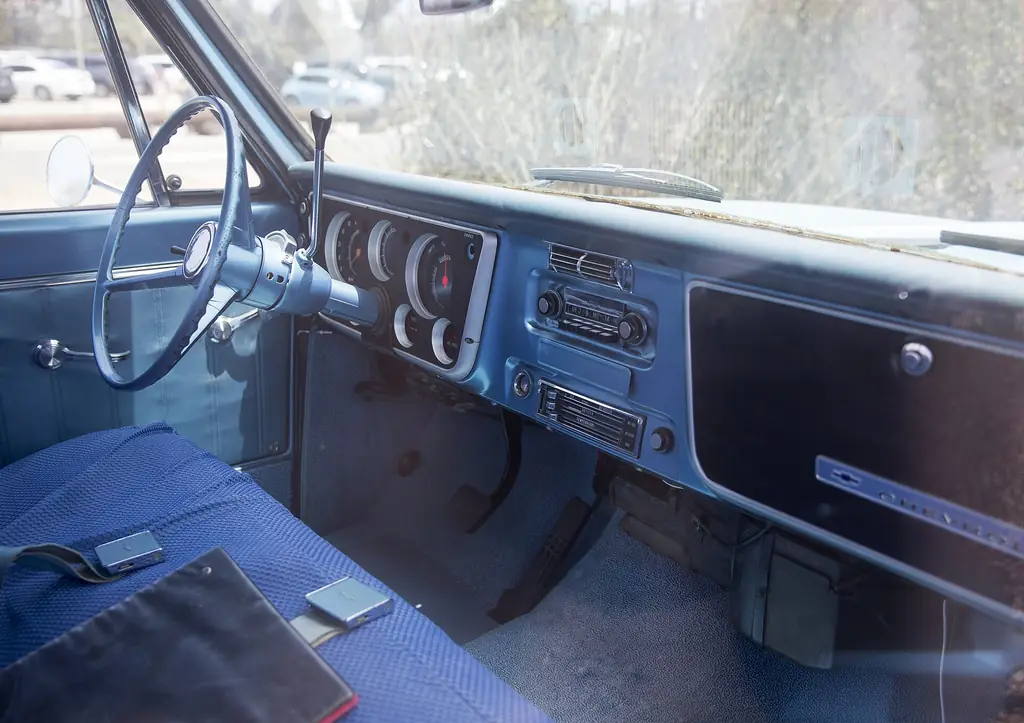
The 1973 Cheyenne Super brochure described a deeply cushioned full-width bench. Buyers could also order bucket seats with a center console, making the cabin layout a visible choice.
A bench left the front of the truck looking like one broad seating area rather than two separate chairs.
Our Ford truck features guide offers another view of pickup practicality. Here, choosing the front seat visibly changed the feel of the cab.
11. The El Camino mixed a car body with a cargo bed
The 1959 El Camino put an open cargo bed behind a passenger-car-style cabin. Its low profile and elaborate rear styling gave Chevrolet’s utility vehicle a very different presence from a conventional pickup.
That combination is the feature: a useful load space inside a body shaped around car proportions.
The open bed remained part of the silhouette, giving the El Camino a recognizable combination of passenger-car styling and cargo-carrying space.
12. The windshield wrapped around the cab corners
Chevrolet’s Task Force trucks used a wraparound windshield, carrying glass toward the cab sides. Those curved corners gave the truck a recognizable face before its grille came into view.
Chevrolet’s history notes that the C/K lost its wraparound windshield in the 1964 facelift.
The earlier glass is a useful dating clue because later C/K trucks adopted a flatter windshield. That changed the appearance of the cab’s front corners.
Sources and model-year references
Sources & photo credits
Photo credits Photographers, sources and licences
Other photography
- 1967 Chevrolet C10 Stepside with its bed-side step by MercurySable99; CC BY-SA 4.0. Resized and converted to WebP. Original photo license applies.
- 1972 Chevrolet K10 Blazer with its hardtop fitted; the text discusses the later 1973 model by dave_7 from Lethbridge, Canada; CC BY-SA 2.0. Resized and converted to WebP. Original photo license applies.
Other photography
- 1971 Chevrolet Suburban, exterior context for the same body generation by Niels de Wit from Lunteren, The Netherlands; CC BY 2.0. Resized and converted to WebP. Original photo license applies.
- 1967 Chevrolet C10 interior with a full-width front bench by Mr.choppers; CC BY-SA 3.0. Resized and converted to WebP. Original photo license applies.